


Lens Color Guide: Brown vs Grey vs Green Polarized Sunglasses (Cali Life Co.)
TL;DR: Brown, grey, and green are the three most common polarized lens colors, and each does something different. Brown lifts contrast on overcast and low-light days by filtering blue wavelengths. Grey preserves color accuracy across the spectrum, which is why it is the default for most drivers and travelers. Green strikes a middle ground, blocking some blue and yellow while keeping reds and oranges intact. Cali Life Co. offers polarized UV400 lenses in multiple tints across its handcrafted wood sunglass line in San Diego. This guide explains how each color performs in real California conditions, which activities favor which tint, and how to pick a pair you will actually wear.
If you are buying one pair: grey for general use, brown for variable light, green if you spend most of your time around water.
How lens color affects what you see
Lens tint changes the wavelengths of visible light that reach your eye. Different tints filter different parts of the spectrum, which translates to different perception of contrast, depth, and color.
The American Academy of Ophthalmology publishes guidance on lens tint and eye health noting that color does not affect UV protection but can meaningfully change comfort and visual performance.
Polarization is a separate filter that cuts horizontal glare. UV400 is a separate spec that blocks ultraviolet light. Color sits on top of those.
Brown lenses
Brown and amber lenses filter blue light, which is the wavelength most responsible for haze on overcast days and softness in shadows. Filtering blue lifts contrast, which is why brown is the favorite of pilots, hunters, and golfers who need to read terrain across distance.
What brown is good for:
1. Variable light, including partly cloudy California coastal mornings 2. Dawn and golden hour driving 3. Reading terrain on a hike 4. Fishing in shallow water where bottom contrast matters 5. Golf and other distance-judgment sports
What brown is not great for:
1. Bright midday sun, where the warm cast can shift true colors 2. Snow, where the warm tone reduces depth perception
Grey lenses
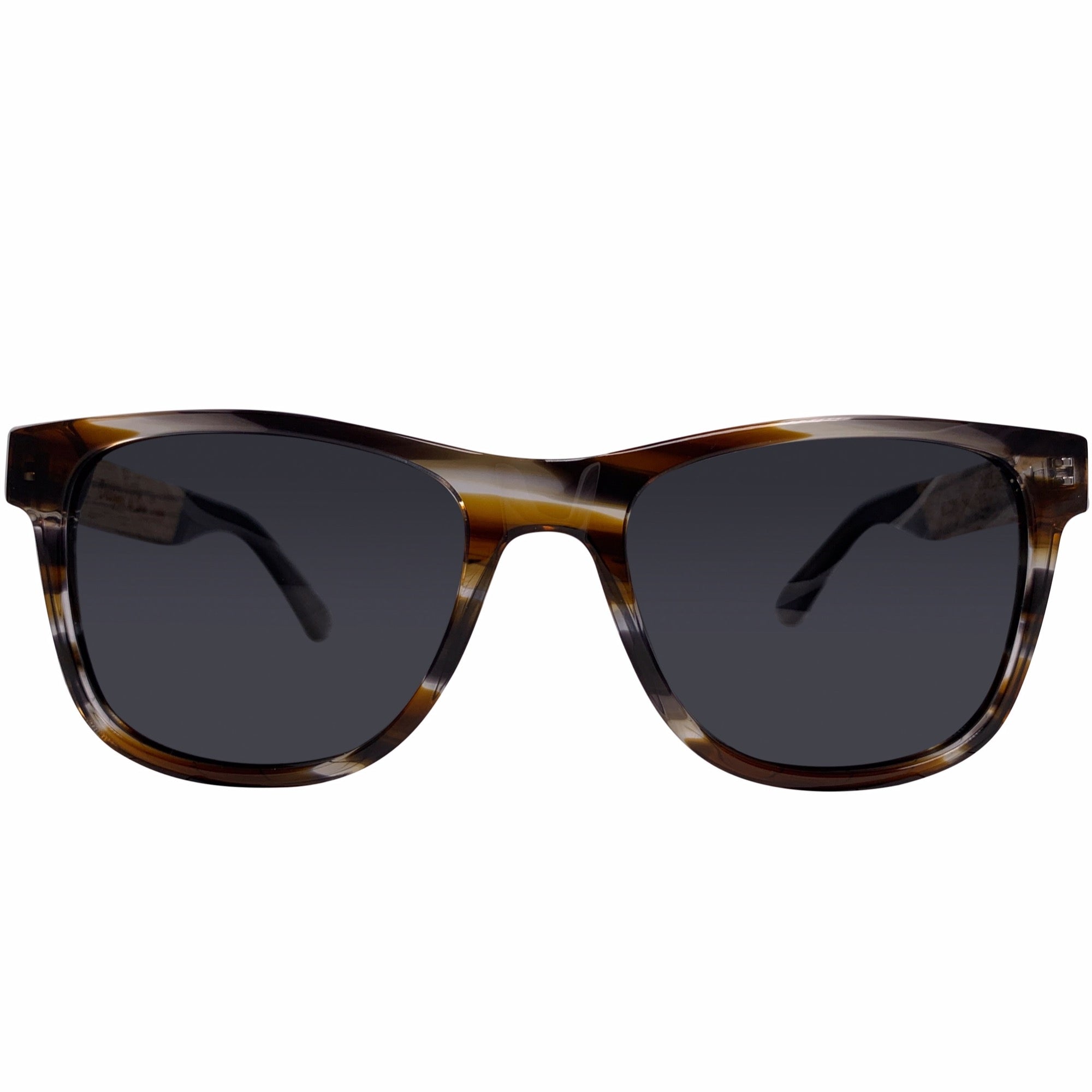
Grey lenses block light evenly across the visible spectrum, which preserves color accuracy. Looking through grey, a red car still looks red, a green tree still looks green. Nothing shifts. This is why grey is the default for general use and for any situation where color matters.
What grey is good for:
1. Bright midday driving 2. Beach days with no haze 3. Photography, where you need to judge color 4. Long road trips where you are evaluating road conditions 5. Anyone who only owns one pair
What grey is not great for:
1. Low light, where it can feel too dark 2. Reading terrain through atmospheric haze
Green lenses
Green lenses are the original aviator color, and they have a reason. Green strikes a middle ground, blocking some blue and yellow while keeping reds and oranges relatively intact. The result is balanced contrast with mild color shift, which works particularly well around water.
What green is good for:
1. Open water, where reflected blue is intense 2. Tennis, baseball, and other ball sports against grass 3. Mixed-light conditions, including filtered tree shade 4. Long days where you want comfort over precision
What green is not great for:
1. Color-critical work like photography 2. Pure low-light driving
Side by side
| Lens color | Best for | Color shift | Contrast lift | |---|---|---|---| | Brown | Variable light, driving | Warm | High | | Grey | Bright sun, color accuracy | Neutral | Low | | Green | Water, sports | Slight | Medium |
How to pick for your life
Pick brown if you live in a place with a lot of overcast or coastal fog. Pick grey if your sunglasses live in your car and have to handle anything. Pick green if you are around water, on a tennis court, or you grew up wearing aviators and like the way they feel.
A lot of California life happens in mixed light. Sunrise drives, golden hour walks, marine-layer mornings, and sharp midday peaks. That is why Cali Life Co. handcrafts polarized wood sunglasses in San Diego with TAC polarized UV400 lenses in multiple tints. Browse the polarized wood sunglasses collection to compare options. For driving-specific guidance, see are polarized sunglasses worth it for driving. For fishing, see what sunglasses are best for fishing.
FAQs
What is the best polarized lens color for driving?
Grey for bright midday driving and color accuracy, brown for sunrise, sunset, and overcast conditions. Most drivers who own only one pair pick grey because it handles the widest range of conditions.
Are brown lenses better than grey for fishing?
For shallow-water sight fishing where bottom contrast matters, brown wins. For open-water deep fishing, grey or green often performs better because color accuracy and balanced light reduce eye fatigue.
Why are green lenses common on aviators?
Green lenses balance contrast and color accuracy, which performed well in early aviation when pilots needed to read both terrain and instrument panels. The balanced behavior carried over into sport and lifestyle eyewear.
Do darker lenses block more UV?
No. UV protection comes from a lens treatment, not the tint. UV400 lenses block 100 percent of ultraviolet light up to 400 nanometers regardless of how dark or light the visible tint is.
Can I get prescription polarized wood sunglasses?
Some opticians can fit prescription polarized lenses into wood frames. Cali Life Co. focuses on non-prescription handcrafted pairs with TAC polarized UV400 lenses in standard tints.
What lens color works in snow?
Grey or green. Brown lenses can reduce depth perception in pure white-on-white snow conditions because the warm tone flattens cool-light contrast.
Are mirrored lenses better than tinted?
Mirrored lenses add a reflective coating on top of a base tint, reducing glare further at the cost of some color accuracy. They are a personal preference rather than a universal upgrade.
---
Cali Life Co. handcrafts polarized wood sunglasses in San Diego, California. Every pair is backed by a lifetime warranty.
Shop polarized UV400 frames


Polarized UV400 - real wood and bamboo - lifetime warranty - designed in California.
Ready to put the right lens on the right frame? Shop our wood sunglasses and eco-friendly sunglasses collections. Every pair is polarized UV400 with a lifetime warranty.